HULL SURVEY – WELDING STANDARD

The welding joint’s configuration and their profile are playing a vital role in ship hull structure integrity. In this article I’d like to reveal some noted points which will be regularly observed during inspection. JOINT TOLERANCES AND REMEDIAL ACTIONS: 1-Butt joint: 2-Fillet joint 3-Lap joint 4-Special note: Fillet leg size for main longitudinal  The fillet weld is to be fully penetrated, otherwise fillet size is to be equivalent to the sectional area of the longitudinal members. General fillet size F1,F2 Frame of bulk carrier Bilge Keel & Pillar End Sheer strake and deck   Welding at high stress area For … Continue reading HULL SURVEY – WELDING STANDARD
HULL SURVEY – GOOD BROUGHT IN

In the most rule requirements,  the presence of the surveyor is required at times when materials or parts manufactured at places other than the shipyard are being installed aboard the ship concerned. The general conceptual flow of the acceptance inspection process is shown as below: Inspection Procedures Presentation of list Before the start of construction of the ship, a request should be made to the shipyard to submit a list of hull assembly units, equipment and materials which are brought-in or manufactured by a sub-contractor and intended to be used in the ship. These must be subjected to an acceptance … Continue reading HULL SURVEY – GOOD BROUGHT IN

HULL SURVEY – BUILDING PROCEDURE

There are two main types of building procedures. One is the frame erection system which was prevalent before 1950 and the other is the block assembling system adopted by almost all shipyards today. In this guidance, the building procedure employed is assumed to be the block assembling system. Frame erecting system This is an old practice adopted for wooden ships in many years ago and continuously adopted for iron and steel ships of riveted construction in the 19th Century. Even now, some small shipyards continue to use this method. Block assembling system During the World War II, the construction of … Continue reading HULL SURVEY – BUILDING PROCEDURE

HULL SURVEY – GENERAL

The purpose of this article series are guidance describing the general instructions for classification surveys during construction relating to hull construction and does not include those survey items concerning SOLAS Convention matters such as life saving, fire-fighting, etc. In general of view, i’m giving you the first glance for scopes of a surveyor: Responsibility for Quality Assurance “ The workmanship is to be of the best quality. During construction, the builder is to supervise and inspect in detail every job performed in shed (workshop) and yard (field) as well. ” This means that the first responsibility for quality assurance of … Continue reading HULL SURVEY – GENERAL

New Shipbuilding Knowledge from Design to Construction

For first sight on Shipbuilding engineering knowledge, it’ll be more easy to understand what/how the ship be built in a yard from design to delivery by overview one typical Shipyard’s organization: SHIPBUILDING ENGINEERING ORGANIZATION Hereby the Essential knowledge points list … Continue reading New Shipbuilding Knowledge from Design to Construction

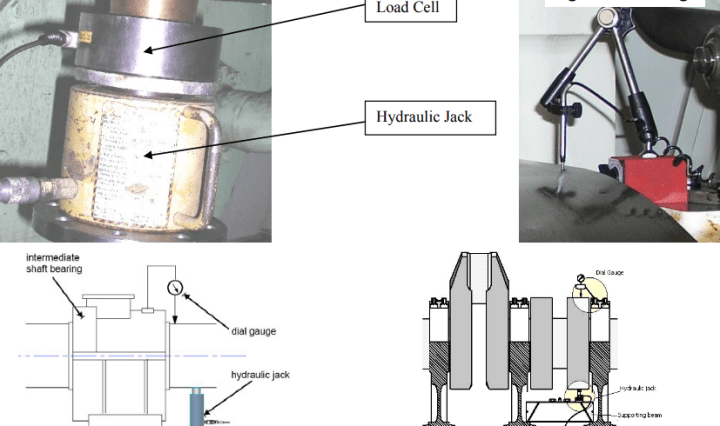
Main Engine Shaft Alignment – Comprehension (Check conditions/ items/ tolerance/ docking/ undocking/ bearing loads or reactions/ jackup curve understanding)

What is shaft alignment condition? “A static condition observed at the bearings supporting the propulsion shafts.” The basic procedure for determining vertical alignment of shafting and gears is to calculate, for the cold condition at time of aligning, a shape … Continue reading Main Engine Shaft Alignment – Comprehension (Check conditions/ items/ tolerance/ docking/ undocking/ bearing loads or reactions/ jackup curve understanding)

General about Marine Fuels!

Marine fossil fuels: The majority of the existing and proposed marine fuels are of the same origin. The same fuel composition may be available from renewable sources (e.g. natural gas – bio gas, methane…) but here only the most common are taken into consideration. + How is a crude oil feld formed? The generally accepted theory is that crude oil was formed over millions of years from the remains of plants and animals that lived in the seas. As they died, they sank to the seabed, were buried with sand and mud, and became an organic-rich layer. Steadily, these layers … Continue reading General about Marine Fuels!

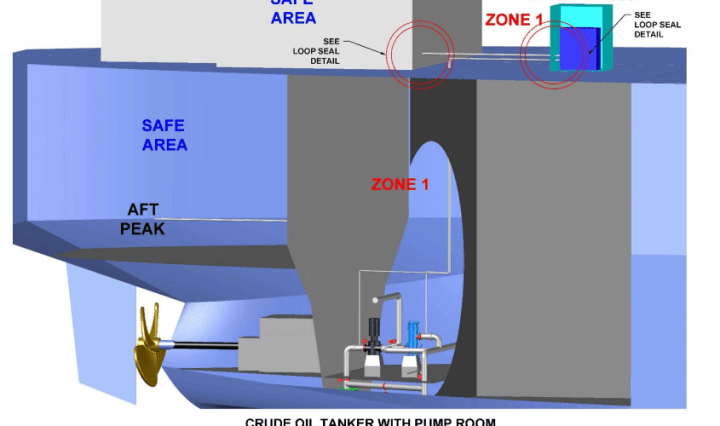
Hazardous Areas Classification on Ship (Examples and explanation by Rules)

It’s will be a long and confusing contents through all the requirement from IEC/IECEx as well as IMO (SOLAS, IBC, IGC codes). Thus, i’ll make it as short as possible to make the article with key knowledge & understanding. FIRST … Continue reading Hazardous Areas Classification on Ship (Examples and explanation by Rules)