



Hot pass in Welding terms
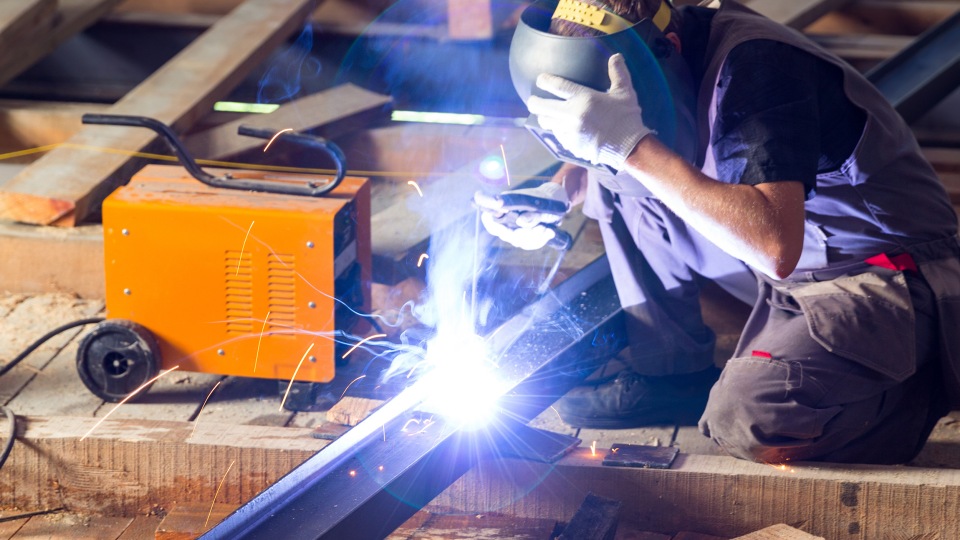
There are certainly many answers for what exactly does HOT PASS means in welding terminology and from where it actually evolved. Different people had a different opinion and they are as below mentioned. It is to fill the weld bevel. It is to melt and float out the wagon tracks left after the root pass. To release trapped gases, hydrogen entrapment at root weld to minimize the risk of Hydrogen induction cracking (HIC). A significant other is that a large majority of pipeline welds are done in a clamp and under some sort of stress. A root bead and hot … Continue reading Hot pass in Welding terms

Electrode flux types and selection (Part 2)
A lot more depends on the selection of the electrode type for successfully carrying out weld with SMAW process. A wrong selection of electrode type may lead to more defects, more repairs. The selection of the correct type of electrode coating results in weld metal with desired quality characteristics at low cost. In general, the welding electrode is selected in such a way that characteristics of weld metal are similar to or better than the base material while keeping in mind the welding position and weld joints design as they significantly affect the properties of the weld. The covering of … Continue reading Electrode flux types and selection (Part 2)
Electrode flux types and selection (Part 1)
CHOOSING THE RIGHT ELECTRODE FOR YOUR NEEDS It is important to consider both materials and technical aspects when selecting stick electrodes. BRIEF OVERVIEW Type, Name, Definition R, RR, Rutile: Standard electrode for universal use, fine to medium droplet transfer, good mechanical properties, welding positions PA, PB, PC, PE, PF, (PG limited use only). RB, Basic-rutile: Use as a combination of achievable, high toughness values and universal use with increased demands on the welder and the seam finishing work. B, Basic: Use for the requirement of high mechanical properties, average to coarse droplet transfer, poorly detaching slag, possible in all positions, please allow for redrying of … Continue reading Electrode flux types and selection (Part 1)
Rimmed Steel, Semi-killed Steel, Fully killed steel
Some low-carbon steels are available in three grades: “rimmed”, “semi-killed”, and “fully-killed”. The terms themselves are derived from the action of the steel when it is poured into an ingot mold after leaving the furnace. In terms of welding, they indicate whether or not there is oxygen in the steel which may cause weld porosity when certain welding processes are used. All carbon steels contain some oxygen. The very nature of the furnaces in which they are made makes this inevitable. It’s what happens to the oxygen when a weld is made that is significant. When a rimmed steel is welded, some … Continue reading Rimmed Steel, Semi-killed Steel, Fully killed steel

Wire electrode specifications
Flux-Cored Electrodes’ Usability Designators: What Do They Mean? Q: I am a new salesperson for a welding supply company. I have noticed that the AWS classification number for many of the flux-cored wires we carry are the same on the front end, but then have different dash numbers on the back end. Some example numbers are E71T-1, E71T-8, E71T-9, E71T-11, etc. Some wires even have two or three numbers on them. I have heard these “dash numbers” called performance capabilities numbers. But what exactly do they mean? Also, how can some wires have more than one AWS number? A: The dash numbers you … Continue reading Wire electrode specifications

Fatigue on Weld
Designing for fatigue is very different than designing for static loads. One of the biggest challenges is being able to estimate the loads, timing of the loads and duration of the loads. If you look at a bridge you have to estimate the number of vehicles going on the bridge every day, the weight of these vehicles, and other forces and loads acting on the bridge such as its own weight (steel and concrete), wind loading, and pre-existing stresses such as those caused by welding. Girders are subjected to fluctuating loads which combined with temperature and fabrication quality will determine … Continue reading Fatigue on Weld
API 1104 WPS joint design variables
Refer to: EN 15614 Para 8.4.3 Joint variables, AWS D1.1: WPS variables – Joint design, ASME IX: WPS variables – Joint design. 5.4 Essential Variables 5.4.1 General A welding procedure shall be reestablished as a new welding procedure specification and shall be completely requalified when any of the essential variables listed in 5.4.2 are changed. Changes other than those given in 5.4.2 may be made in the procedure without the need for requalification, provided the welding procedure specification is revised to show the changes. 5.3.2.4 Joint Design description in WPS The specification shall include a sketch or sketches of the joint that show … Continue reading API 1104 WPS joint design variables

EN 15614 Para 8.4.3 Joint variables
For level 1: The range of qualification for the type of welded joints is as used in the welding procedure test subject to limitations given in other clauses (e.g. thickness) and additionally: a) full penetration butt welds qualify full and partial penetration butt welds and fillet welds in any type of joints; b) butt joints qualify any branch connections; c) fillet welds qualify fillet welding only; d) welds made from one side without backing qualify welds made from both sides and welds with backing; e) welds made with backing qualify welds made from both sides and welds made without backing; f) welds … Continue reading EN 15614 Para 8.4.3 Joint variables

COFFERDAM VS VOID SPACE (full words)
A ship operates using mainly four main kinds of liquids: fuel or diesel oil, lube oil, fresh water, and seawater. These liquids are stored at various places on the ship in their dedicated tanks. Apart from these, there are other … Continue reading COFFERDAM VS VOID SPACE (full words)
 AMARINE