



CSWIP 3.1 TERMS & DEFINITION
Key notes: TERMS: Brazing (A) vs Braze welding (B) Weld Zone JOINT TYPE: Autogenous welding Spot weld Lap joint (Electric resistance welding) WELDING PREPARATION: EB insert (Backing ring) vs Backing strips General Root Gap Asymmetric preparation WELDING TYPE: Compound weld and Special Groove (Bevel) weld in T-joint WELDING POSITIONS: Test Position vs Qualifying Position Continue reading CSWIP 3.1 TERMS & DEFINITION
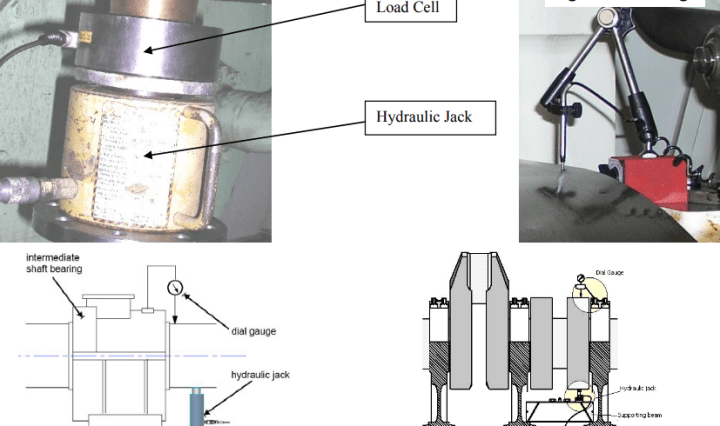
Main Engine Shaft Alignment – Comprehension (Check conditions/ items/ tolerance/ docking/ undocking/ bearing loads or reactions/ jackup curve understanding)
What is shaft alignment condition? “A static condition observed at the bearings supporting the propulsion shafts.” The basic procedure for determining vertical alignment of shafting and gears is to calculate, for the cold condition at time of aligning, a shape … Continue reading Main Engine Shaft Alignment – Comprehension (Check conditions/ items/ tolerance/ docking/ undocking/ bearing loads or reactions/ jackup curve understanding)
Fire Integrity On Ship.
Check the Password and Visit: Protected: Fire Integrity On Ship (Full example of how to select the grades on Zones, division on a ship or topsite) Continue reading Fire Integrity On Ship.
Protected: Rotating Machine Chocking – (Types of chock, contact test, tolerance, and inspection)
There is no excerpt because this is a protected post. Continue reading Protected: Rotating Machine Chocking – (Types of chock, contact test, tolerance, and inspection)

General about Marine Fuels!
Marine fossil fuels: The majority of the existing and proposed marine fuels are of the same origin. The same fuel composition may be available from renewable sources (e.g. natural gas – bio gas, methane…) but here only the most common are taken into consideration. + How is a crude oil feld formed? The generally accepted theory is that crude oil was formed over millions of years from the remains of plants and animals that lived in the seas. As they died, they sank to the seabed, were buried with sand and mud, and became an organic-rich layer. Steadily, these layers … Continue reading General about Marine Fuels!
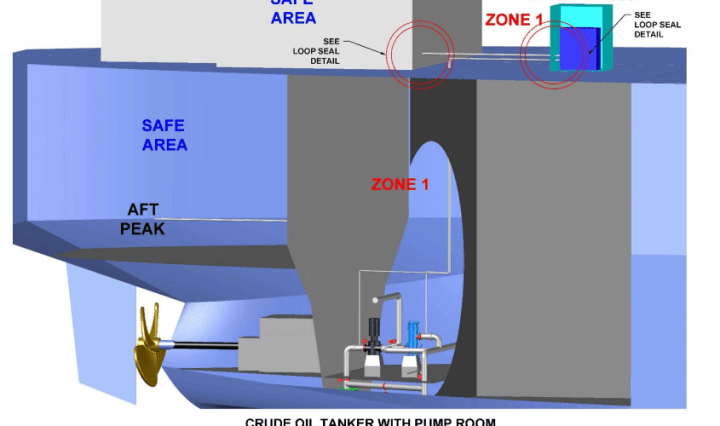
Hazardous Areas Classification on Ship (Examples and explanation by Rules)
It’s will be a long and confusing contents through all the requirement from IEC/IECEx as well as IMO (SOLAS, IBC, IGC codes). Thus, i’ll make it as short as possible to make the article with key knowledge & understanding. FIRST … Continue reading Hazardous Areas Classification on Ship (Examples and explanation by Rules)

Intrinsically Safe Cable
Intrinsic safety – I.S is a protection technique for the safe operation of electrical and electronic equipment/system in Hazardous Areas where any ignition source needs to be eliminated. Electrical cables are essentially sealed from damage, external electrical or magnetic fields (EMI), and isolated from non-intrinsically safe circuits. (Avoid the increase of amperes mA in I.S system –> A –> Hot spot –> Ignition -> Explosion ) I.S cables are usually colored blue so as to identify the potential risk of the electric circuit and the need for special consideration. The I.S cable to be separated from Non-I.S circuits. Hazardous areas is the … Continue reading Intrinsically Safe Cable
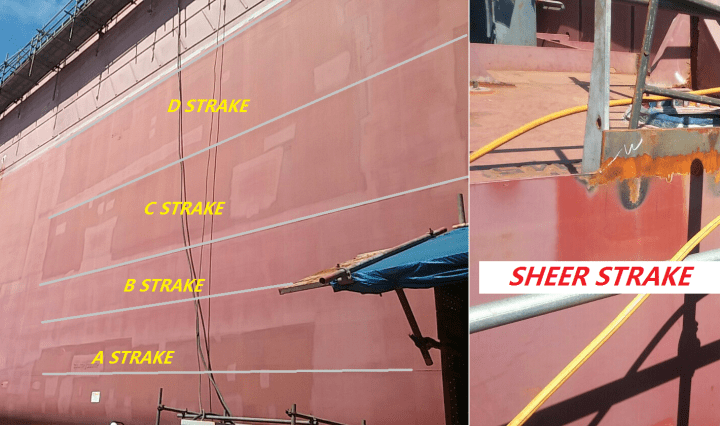
Sheer Strake – An important plate of ship
This topic is an additional knowledge support for SHIP STRENGTH CALCULATION (Part 1) and SHIP STRENGTH CALCULATION (Part 2). Under sea-going condition, the Hogging and Sagging condition make the ship steel be continuously compressed and stretched those making steel become fatigue collapsed specially … Continue reading Sheer Strake – An important plate of ship
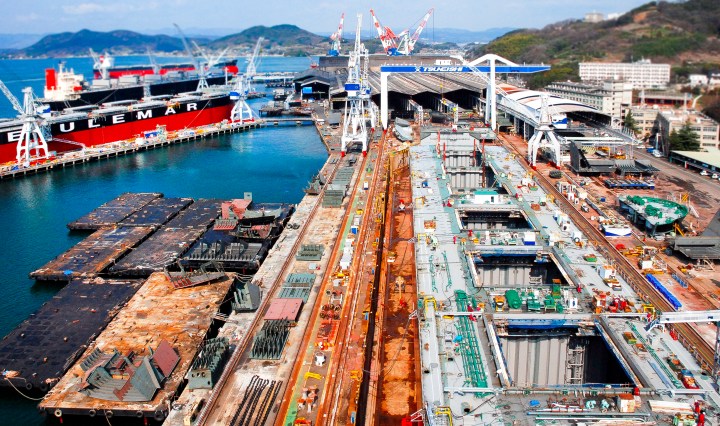
Design draft vs Scantling draft
The Draft, as simple definition is the distance between the sea level and the bottom of hull (included the thickness of bottom – see this topic) Meanwhile, at the initial design stage, there are two terms of Scantling & Design … Continue reading Design draft vs Scantling draft
 AMARINE