



Ship noise and vibration control
Vibration is a complex phenomena happen on ship and machinery space, to understand and have the first sight of vibration assessment or further development, the fundamental of vibration theory is the great article for your pre-learning with such concept. In this topic, i’ll try to make it it as simple as possible to know-how the vibration analysis and modeling solutions in engineering term. As defined, any motion that repeats itself after an interval of time is called vibration or oscillation. 1st Basic modeling objects A vibratory system, in general, includes a means for storing potential energy – thế năng (spring or … Continue reading Ship noise and vibration control
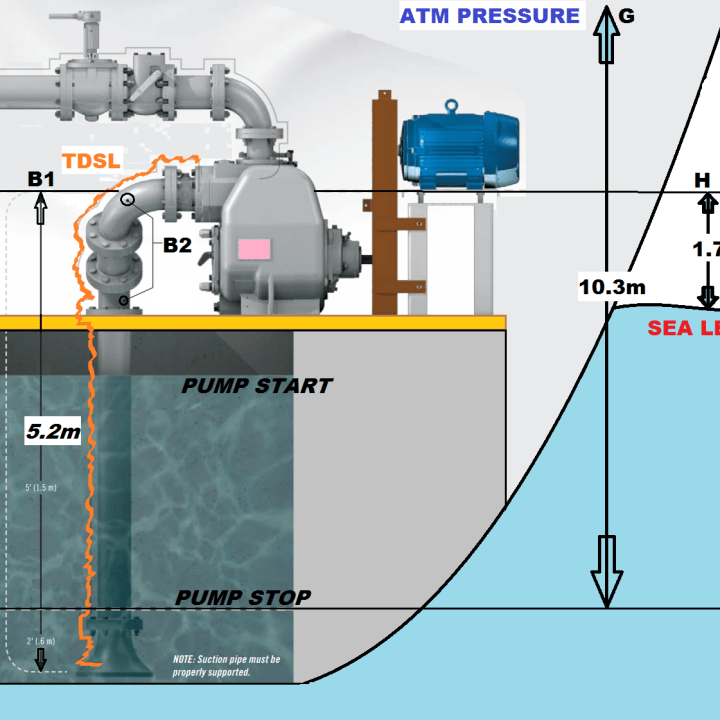
NPSH – How much is enough? (theory and exam)
A general introduction about NPSH in CENTRIFUGAL PUMP (Advanced) article. But the confusion raised that you still not understand how it works and how to evaluate the NPSH … Continue reading NPSH – How much is enough? (theory and exam)

Zinc in the Fuel oil (affection on Machinery explanation & experiment, gears, and prevention)
For marine work, we have tank and pipe to store & transfer oil. Now this topic will search about the effect of Zinc coating for tank and pipe in fuels oil. The concentration of zinc in a fuel was found depend upon … Continue reading Zinc in the Fuel oil (affection on Machinery explanation & experiment, gears, and prevention)
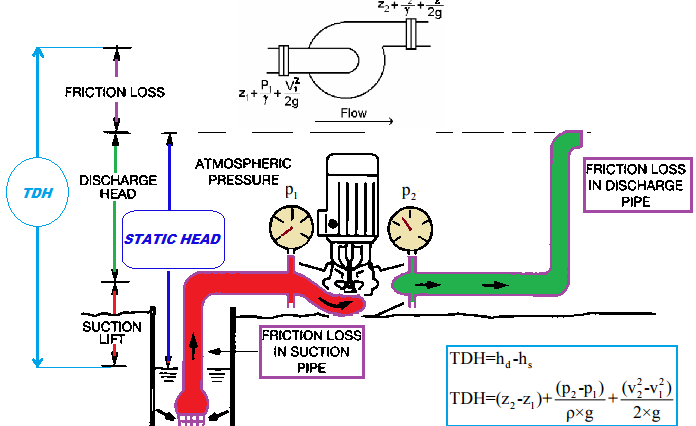
Pump Head vs Discharge Pressure (Easy explanation and examples)
One of the most important factor when inspect a pump is to find out the real Static Head or How much height that the pump can lift the fluid . ( See the CENTRIFUGAL PUMP (Advanced) to see how to calculate the pump … Continue reading Pump Head vs Discharge Pressure (Easy explanation and examples)

EEDI and CO2 emission
During the 62nd session of the MEPC (11–15 July 2011), at IMO Headquarters in London, the represented Parties to MARPOL Annex VI adopted amendments to Annex VI Regulations for the prevention of air pollution from ships. Considered the first regulation to establish CO2 standards across a global sector, the Energy Efficiency Design Index (EEDI). In terms of CO2 emissions, shipping contributes to about 2.5% of the world’s emissions and the emission rate will increase by 75% in the next 15 years due to demand and growth in global trade. What is EEDI mean? The EEDI is used to calculate a … Continue reading EEDI and CO2 emission

Ship Green passport and demolition
Today, when recycling and re-using goods and products become an important requirement, even ships are recycled. With the rise in awareness towards maritime environment, there have been several changes in the process of ship breaking, which have given rise to a new term – green ship recycling. Why is Ship Recycling needed? Ship dismantling is highly necessary as the maintenance expenses of a particular vessel keep increasing with time and difficult to affordable. Therefore, the shipowners seek the easy way out and hand over the old vessel for effective disposal, so that they can focus on dealing with other regular expenses … Continue reading Ship Green passport and demolition

SOx and Marine Fuel quality
As discussed in our previous article (NOx & Tier), one of the major global environmental concerns today is the air pollution from maritime transportation. The main elements of pollution are NOx and SOx. Sulfur oxides emission is mainly due to the presence and burning of sulfur compound in the fuel. Causes and Effects of SOx Emission The sulfur oxides emission is due to the presence of sulfur compound in the marine fuels used in marine engines on board vessel. Better the grade, lower will be the sulfur content as it is removed by refining of the fuel. The smoke containing sulfur … Continue reading SOx and Marine Fuel quality

Engines with NOx and Tier I, II, III status
Air pollution from ships is on the rise and global emission standards are getting stringent every year. MARPOL Annex VI limits the main air pollutants contained in ships exhaust gas, including sulphur oxides (SOx) and nitrous oxides (NOx), and prohibits deliberate emissions of ozone depleting substances. What is NOx? NOx is a term for mono-nitrogen oxides NO and NO2 (nitric oxide and nitrogen dioxide). They are produced from the reaction of nitrogen and oxygen gases in the air during engine combustion, in other mean, NOx formed when diesel fuel is burned with excess air-oxygen intake. Nitrogen is a natural element in the … Continue reading Engines with NOx and Tier I, II, III status

MARPOL 73/78 – A General Overview
MARPOL 73/78, since it came into force in 1973 and later revised by the protocol in 1978, ensures that shipping remains the least environmentally damaging modes of transport. It clearly highlights the points to ensure that marine environment is preserved by elimination of pollution by all harmful substance which can be discharged from ship. MARPOL 73/78 This marine environmental convention consists of six implemented Annexes for controlling and eliminating of marine pollution. Annex I: Regulation for prevention of pollution by oil from operational measures as well as from accidental discharges. Key relations: 1. Ballasting or cleaning of cargo oil tanks (Emcy’ ballast, … Continue reading MARPOL 73/78 – A General Overview
 AMARINE