





SHIP STRENGTH CALCULATION
Visit: Shipbuilding Knowledge A-Z for more free topics on shipbuilding Check the password and visit : Protected: SHIP STRENGTH CALCULATION (2 parts) Continue reading SHIP STRENGTH CALCULATION

Protected: SHIP HULL OPTIMUM MAIN DIMENSION (Example of change in dimension, a coefficient to lower the ship resistance)
There is no excerpt because this is a protected post. Continue reading Protected: SHIP HULL OPTIMUM MAIN DIMENSION (Example of change in dimension, a coefficient to lower the ship resistance)

SHIP RESISTANCE AND PROPULSION
From ship resistance, we can figure out how much power required for Main Engine at a specified speed and what type of propeller should be used. 1st Step: Resistance calculation at a range of operation speed ( Base on Hull basic information, coefficient, proper method) 2nd Step: Initial TOWING power requires for propeller ( base on the Step 1 Resistance, hull form, fluid form, required speed, water density, coefficient ect., ) 3rd Step: Choose Type of Propeller and generate the Initial Characteristic chart ( with Power, RPM, propeller Diameter ) 4th step: Choose M.E with relevant RPM, Power & proper Diameter … Continue reading SHIP RESISTANCE AND PROPULSION

SHIP HYDRO STATIC & STABILITY
Theories and procedures for predicting a ship’s hydrostatic response to various conditions are addressed. Methods for computing the stability characteristics of both intact and damaged ships are studied. Floodable length computations are taught. Stability and subdivision criteria are explained. The lines plan for a hull form is developed and analyzed. A naval architect must have below abilities to generate a good job on this subject: Describe methods for calculating a ship’s hydrostatic properties, including calculation of areas, volumes, centroids, and important hydrostatic parameters such as Δ, LCF, LCB, KB, KM, TPI, MT1. Draw and interpret a ship’s lines drawing. Calculate … Continue reading SHIP HYDRO STATIC & STABILITY

DRAUGHT MARKS AND SURVEYING
The purpose of a Load line or Plimsoll line is to ensure that a ship has sufficient freeboard (the height from the water line to the main deck) and thus sufficient reserve buoyancy (e.g., the enclosed volume created by the area between the water-line and the main deck-line). Note : Do Not confuse with Painting Segregation Line. Normally, the scant draft will be defined as “Painting segregation line” and have same position with full summer load line as below: Scant draft Scantling draft is the maximum draft at which the ship can withstand all the loads safely. In other words, … Continue reading DRAUGHT MARKS AND SURVEYING

COLD/HOT CORROSION IN MAIN ENGINE
There are 2 types of corrosion in Marine Diesel Engine : Cold Corrosion Hot Corrosion Cold Corrosion : JACKET WATER TEMP TOO LOW/ “EEDI” COMPILATION –> COLD CYLINDER COLD –> VAPOUR FORM + SOx –>ACID –> CORROSION Cold corrosion can be caused by low exhaust temperatures during very low load operations. Care should be taken to avoid exhaust temperature after the cylinder to drop below 250 deg C. This figure is particularly important as temperature will drop further after extraction of heat in the exhaust boiler. It’s low temperature corrosion Due to sulphur and sulphur products Source : Fuel oil … Continue reading COLD/HOT CORROSION IN MAIN ENGINE

SHIP ICE CLASS
1-WHY DO SHIPS HAVE ICE CLASS? To permit the safe operation of ships in ice-covered sea areas Visit: Shipbuilding Knowledge A-Z for more free topics on shipbuilding 2-WHO REQUIRE ICE CLASS QUALIFICATION? Coastal states with seasonal or year-round ice-covered oceans and seas Specific oceans and sea areas in the context of current and earlier commercial shipping developments for ice operation as well as applicable ice classes: BALTIC SEA: Bay and Gulf of Bothnia, Gulf of Finland – Finnish-Swedish Ice Class Rules (FSICR) Gulf of Finland (Russia territorial waters) – Russian Maritime Register (RMR) Ice Class Rules ARCTIC OCEAN: Barents, Kara, … Continue reading SHIP ICE CLASS

MOULDED LINE IN SHIPBUILDING (full guideline)
Moulded line is the reference line used for ship construction. Base on the standardized mould line we can find out the exact location of structure members during fit-up, dimension inspection, or shaft pre-sighting ect,. Question: Draft Mark for hull shell … Continue reading MOULDED LINE IN SHIPBUILDING (full guideline)
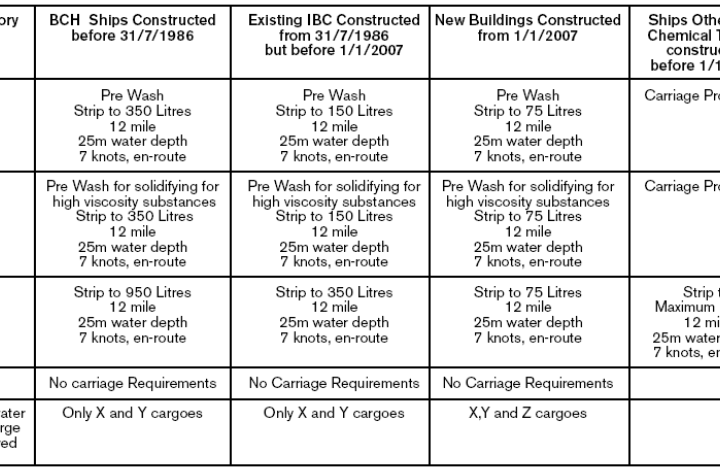
SHIP IMO TYPES I, II, III
Additional knowledge on Shipbuilding: Shipbuilding Knowledge A-Z Before going through this article, we should know about the three core principles that originated these terms – ( … Continue reading SHIP IMO TYPES I, II, III
 AMARINE