

𝐏𝐢𝐩𝐞 𝐀𝐫𝐫𝐚𝐧𝐠𝐞𝐦𝐞𝐧𝐭 𝐨𝐧 𝐏𝐢𝐩𝐞 𝐑𝐚𝐜𝐤𝐬 𝐁𝐚𝐬𝐞𝐝 𝐨𝐧 𝐀𝐒𝐌𝐄 𝐁31.3 ;
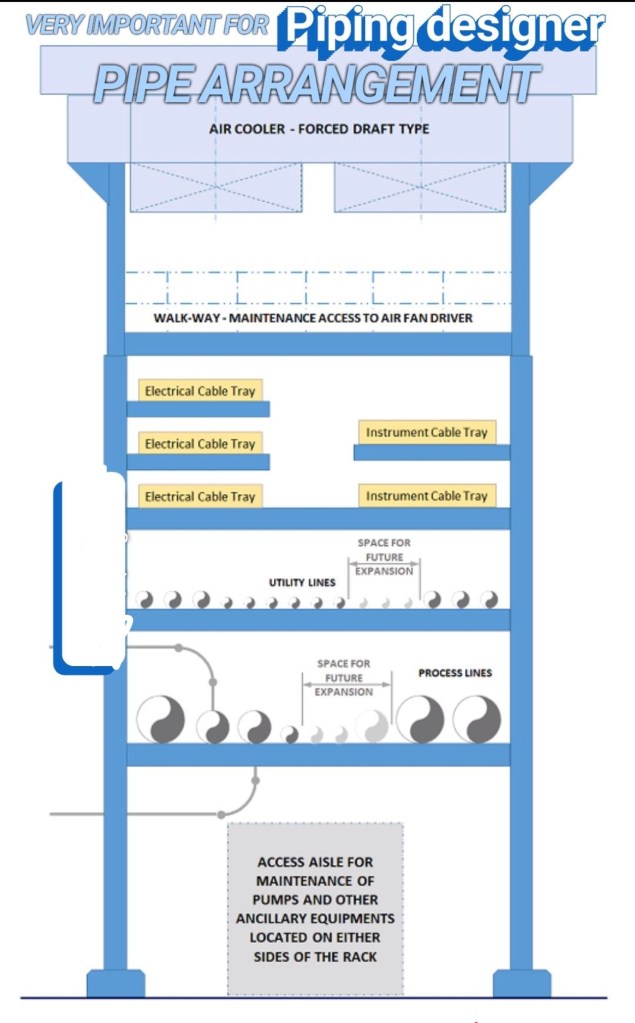
The 𝘈𝘚𝘔𝘌 𝘉31.3 standard, which is used for industrial piping design in the oil, gas, petrochemical, and related industries, includes various provisions for the layout of pipes side by side. Some of the aspects addressed in this standard for pipe layout include:
- 𝐒𝐩𝐚𝐜𝐢𝐧𝐠 𝐛𝐞𝐭𝐰𝐞𝐞𝐧 𝐩𝐢𝐩𝐞𝐬: The 𝘈𝘚𝘔𝘌 𝘉31.3 standard specifies the minimum and maximum allowable spacing between pipes. This includes the spacing between parallel pipes and intersecting pipes. The objective is to ensure there is enough space for access, maintenance, and repair of the pipes.
The purpose of specifying pipe spacing is to ensure that there is sufficient clearance between adjacent pipes to facilitate safe operation, maintenance, and inspection of the piping system. Adequate spacing allows for easy access to valves, fittings, and other components, as well as for visual inspection, leak detection, and potential repairs.
- 𝐒𝐩𝐚𝐜𝐢𝐧𝐠 𝐟𝐨𝐫 𝐞𝐧𝐯𝐢𝐫𝐨𝐧𝐦𝐞𝐧𝐭𝐚𝐥 𝐜𝐨𝐦𝐩𝐚𝐭𝐢𝐛𝐢𝐥𝐢𝐭𝐲: The standard provides specifications for pipe spacing to ensure compatibility with environmental factors such as heat, moisture, dimensional changes, and dynamic forces. This includes desirable spacing between pipes under #temperature conditions and dimensional changes due to expansion and contraction.
- 𝐋𝐨𝐨𝐩𝐬 𝐚𝐧𝐝 𝐦𝐨𝐯𝐞𝐦𝐞𝐧𝐭 𝐚𝐜𝐜𝐨𝐦𝐦𝐨𝐝𝐚𝐭𝐢𝐨𝐧: The ASME B31.3 standard addresses the requirements for loops to accommodate movement resulting from thermal expansion, contraction, and dynamic forces between pipes. This includes #loop length, location, and calculation methods for determining the need for loops.
- 𝐒𝐮𝐩𝐩𝐨𝐫𝐭 𝐟𝐨𝐫 𝐩𝐢𝐩𝐞𝐬: The standard provides specifications for #pipe support. This includes the #selection and #design of hangers, supports, shoes, rollers, and other methods of supporting pipes in various locations. ASME B31.3 specifies the necessary conditions and criteria for withstanding static and dynamic loads.
- #Safety 𝐫𝐞𝐪𝐮𝐢𝐫𝐞𝐦𝐞𝐧𝐭𝐬: The #ASME_B31.3 standard includes safety requirements for the layout of pipes side by side. This includes aspects such as separation of pipes from structures, the use of fire-resistant materials, and fire-rated connections.
𝐓𝐡𝐞 𝐀𝐒𝐌𝐄 𝐁31.3 𝐬𝐭𝐚𝐧𝐝𝐚𝐫𝐝 𝐞𝐧𝐜𝐨𝐦𝐩𝐚𝐬𝐬𝐞𝐬 𝐚 𝐜𝐨𝐦𝐩𝐫𝐞𝐡𝐞𝐧𝐬𝐢𝐯𝐞 𝐬𝐞𝐭 𝐨𝐟 𝐫𝐮𝐥𝐞𝐬 𝐚𝐧𝐝 𝐫𝐞𝐠𝐮𝐥𝐚𝐭𝐢𝐨𝐧𝐬 𝐭𝐡𝐚𝐭 𝐚𝐫𝐞 𝐚𝐩𝐩𝐥𝐢𝐞𝐝 𝐢𝐧 𝐭𝐡𝐞 𝐝𝐞𝐬𝐢𝐠𝐧 𝐚𝐧𝐝 𝐢𝐧𝐬𝐭𝐚𝐥𝐥𝐚𝐭𝐢𝐨𝐧 𝐨𝐟 𝐩𝐢𝐩𝐢𝐧𝐠 𝐬𝐲𝐬𝐭𝐞𝐦𝐬. 𝐈𝐭 𝐢𝐬 𝐮𝐬𝐞𝐝 𝐛𝐲 𝐩𝐫𝐨𝐟𝐞𝐬𝐬𝐢𝐨𝐧𝐚𝐥𝐬 𝐭𝐨 𝐞𝐧𝐬𝐮𝐫𝐞 𝐝𝐞𝐬𝐢𝐫𝐞𝐝 𝐩𝐞𝐫𝐟𝐨𝐫𝐦𝐚𝐧𝐜𝐞 𝐚𝐧𝐝 𝐬𝐚𝐟𝐞𝐭𝐲 𝐨𝐟 𝐩𝐢𝐩𝐢𝐧𝐠 𝐬𝐲𝐬𝐭𝐞𝐦𝐬.

