

Guide to flange raised face repaired by machining.
Take a look at the requirements of the height of raised face as per ASME B16.5: ASME B16.5 Flange – Regular Raised Face Height Typically, the height of Raised Face of ASME B16.5 Flange is divided by Flange Class by: 1- Flange Class 150 and 300 which have the Raised Face Height around 2mm. 2- Flange Class 400 and above have Raised Face Height around 7mm. When damage occurs on Flange’s Raised Face, the method to repair without welding works as per ASME PCC-2 can be done by machine, removing the damaged parts and refinishing the Raised Face again. Then do MT … Continue reading Guide to flange raised face repaired by machining.

Orifice Installation Matter in the piping system
Regarding What is Orifice and its application, please refer to FLOW METER AND ORIFICE PLATE Introduction of Erosion on Piping downstream around Orifice installation area: Typical erosion in piping systems often occurs on the flow with the exclusion of turbulence, for example. Where the flow direction changes (elbow, tee) or downstream of the orifice in the pipe system. In addition, Flow is a two-phase (with solid or liquid particles) and has a higher speed of erosion. In the Orifice installation area, the Flow Orifice (FO) is used to block the flow and reduce the pressure of Steam down to allow it to become condensate, but since Steam has passed from Orifice that cannot be fully condensed in this area, the turbulence of Flow will exist. Continue reading Orifice Installation Matter in the piping system

ASME VIII MDMT and Impact test exemption
ASME Code Section VIII Div 1 exemption rules for ASME Impact Test Requirements: There are specific rules in the ASME Code for exemption from ASME Impact Test Requirement. This test is very expensive, so pressure vessel manufacturers are trying to be exempted from this costly test. You need to follow the following clauses to make exemption assessment for ASME impact test requirement: UG-20(f) →→ UCS-66(A) →→ UCS-66(b) →→→UCS-68(c) First, you have to keep your pressure vessel design data available and then refer to UG-20 (f). If you are exempted from this clause, you do not need to proceed further. But … Continue reading ASME VIII MDMT and Impact test exemption

Corrosion in Heat Exchanger
There are 4 main reasons that cause corrosion in heat exchangers to need to be concerned during the inspection: Water impingement, Temperature, Vibration, Velocity. Refer to: Typical location of Corrosion on Heat Exchanger Cooling Water Corrosion in Heat Exchanger Tubes at High Water Temperature Zone; Another important factor affecting Corrosion in Heat Exchanger Tube Service at Cooling Water is the temperature. The area where the Cooling Water has a high temperature ( on the Outlet side ), there will be more fouling and corrosion than the low-temperature area. In the example, you can see from the corrosion that occurred in front of … Continue reading Corrosion in Heat Exchanger

Thermal Expansion affections in Piping system
Linear Thermal Expansion of Pipping; One factor that must be considered in the design of the piping system is Piping Flexibility. Because our pipes will stretch itself when the temperature is increased, and shrink when the temperature is dropped. Therefore, our piping system must be flexible or able to move back and forth sufficiently to support elongation or shrinkage of pipe. In ASME B31.3 Process Piping Design determines the Linear Thermal Expansion of each material. To be used to calculate how much piping will stretch or shrink according to how much temperature has changed. The values in Table C-2 measure … Continue reading Thermal Expansion affections in Piping system

What is Mock-up test for In-service Welding
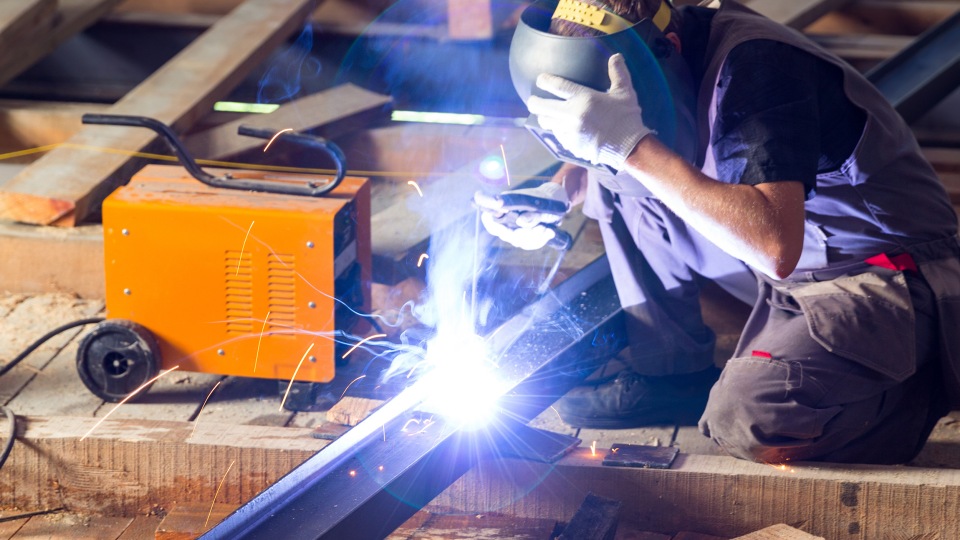
Following the concerns of welding defects for in-service maintenance hot works, the Mock-up test should be performed to increase the confidence level of works. See this: In-service and maintenance welding defects Mock-Up Testing ; This comes at a Mock-up Testing for In-service welding or welding On-stream … For onstream welding, while there is fluid flowing inside the pipe or equipment The most important is the safety that is not going to burn through the weld and weld it must not happen Hydrogen cracking (HIC) according to the method used to prove that the simulated welding or the Mock-up test. In conducting a mock-up test, the workpiece must look like or represent the actual work in the matter including: (1) Type ( Material Spec.), and the thickness of … Continue reading What is Mock-up test for In-service Welding

In service and maintenance welding defect
In-Service Welding Concerns; When welding, repairing or modifying pipelines or equipment that are currently being used (In-Service), the most worrying is the leak of the fluid inside. While or after doing On-line Welding. The two main reasons that cause the leak are: Burn Through: While welding at the melting area of the welding, the strength will be reduced. We may not be able to withstand the Pressure at Service value. Weld Cracking or Hydrogen Induced Cracking (HIC) from welding. The additional concern in welding is the cooling rate. Since the inside of the pipe or equipment has fluid flow, it may … Continue reading In service and maintenance welding defect

What is Valve Trim
Valve Trim; Valve Trim is a name for Valve ‘s Internal Parts that come into contact with Process Fluid and be Worn. The deterioration caused by the use of Valve Trim can be replaced (Replaceable), including Seat, Disc, Stem, Bushing, and others. The parts of Valve that are considered Valve Trim will depend on the type of Valves in the table. Meanwhile, the Body, Yoke, and Bonnet are not considered. Valve Trims Standard: (API 600) Continue reading What is Valve Trim
AWS D1.1 2020 Changed notes
Below is a summary of the material changes made to the 2020 edition of AWS D1.1. Format changes – moving to 11 clauses from 9. This change was made to improve clarity and it includes the addition of reference tables, formatting to mimic the normal progression of welding procedure qualification, as well as other updates to improve ease of use. Additional requirements are added when using shielding gases for use with prequalified welding procedures. Revision of the requirements for the qualification of WPSs using waveform technology (Heat input, auto-calculation, and record.) Revisions made to the qualification requirements for inspection personnel … Continue reading AWS D1.1 2020 Changed notes
 AMARINE