



Globe Valve components and working
Globe Valve Component; Globe Valve is used to control the flow rate. By turning the flow direction of the fluid perpendicular to the fluctuations of the Disc and Stem by Globe valve components as follows: Globe Valve Working; Globe valve controls the flow rate by turning the fluid direction upright and perpendicularly, allowing for easy opening and closing. Therefore, it can be used for systems with very high-pressure differences, but due to the change in the flow direction, the pressure drop across the Globe valve is increased accordingly. Continue reading Globe Valve components and working

Piping erosion by Steam
Erosion by Steam and Condensate; Erosion or erosion by Steam and Steam Condensate is caused by Steam / Condensate In our system, a two-phase state occurs: Steam vapor is mixed with condensate water. The reason why the two-phase is caused by: The steam loses heat and energy from running through pipes causing condense to be liquid condensate. Using Steam to heat exchangers in Heat exchanger devices causes liquid condensate to occur. Condensate water in the system is able to evaporate ( flash ) to steam vapor when the pressure in the pipe changes from high to low pressure, such as at the Steam Trap outlet. Continue to … Continue reading Piping erosion by Steam

Barlow formula – Pipe thickness calculation
Barlow’s Formula; Barlow’s Formula is the relationship between Internal Pressure and working pipelines. Depending on the size and strength of the material, Barlow’s Formula is the basic formula used to calculate the thickness of the straight pipe and Cylindrical pressure vessel shell in ASME Code. What is “S” Allowable stress: See SMTS and Allowable Stress Continue reading Barlow formula – Pipe thickness calculation

SMTS and Allowable Stress
Specified Minimum Tensile Strength (SMTS) The ASME Code, Specified Minimum Tensile Strength or SMTS mean stress (Stress), the lowest that can make a material damaged or torn apart by tension ( The Tension), which is made from tensile tests ( Tensile Test,. ), also known as Ultimate Tensile Strength (UTS). How to test and verified the SMTS of weldment: Tension Test Acceptance Criteria for Welding Procedure Qualification Allowable Stress “S”; For ASME Code, pressure vessel or pipe design, the code uses the Tensile stress of each material specified in the calculation. Stress that the code specifies or allows is called Allowable Stress “S”, which … Continue reading SMTS and Allowable Stress

Gate valve testing and maintenance
1- Purpose of using Gate Valve on stream Gate Valve is used to open and close the flow only. Not commonly used in flow control with the following components. 2- Operation (open-closed) of Gate Valve 3- The Hydrostatic Test for Gate Valve requires 3 parts, Shell, Seat, and Backseat The hydro-testing according to API 598. The valve standard is ASME B16.34 ***Gate Valve – Hydrotest Backseat; The Hydrostatic Backseat Test must be tested at a pressure of not less than 1.1 times the Maximum Operating Pressure by fully opening the valve and releasing the gland of the gate valve to check for leaks through the Backseat. ***Gate Valve – Hydrotest Shell; Hydrostatic Shell Test must be tested at a pressure … Continue reading Gate valve testing and maintenance

Erosion in Refinery, Petrochemical Plant
Case I: Erosion in Pipeline Branch of line Medium pressure (MP) steam is separated to Steam trap occurs near Elbow ( the Elbow) at the point of impact of the Flow by Steam flow in Line that runs Steam trap that resembles a Two-phase. Case II: Erosion at the opposite tee fitting of the Low-pressure (LP) steam condensate pipe is caused by the two-phase flow (Flash steam + Liquid condensate) from the pipes that condensate from the steam trap that is combined. Case III: When Liquid Condensate runs through the Control valve, some are turning to Flash steam becomes Two-phase flow and flow turbulence ( Turbulent) resulted from Erosion , especially at the point of impact on the joints of the various (Elbow, Tee). Continue reading Erosion in Refinery, Petrochemical Plant

Cyclone Separator in Refinery, Petro Chemical Plan
Cyclone Separator; Cyclone separator uses the incoming flow of rotation and gravity to separate dust or particles from the gas/liquid stream or to separate the spray of water mixed with the gas stream. Continue reading Cyclone Separator in Refinery, Petro Chemical Plan
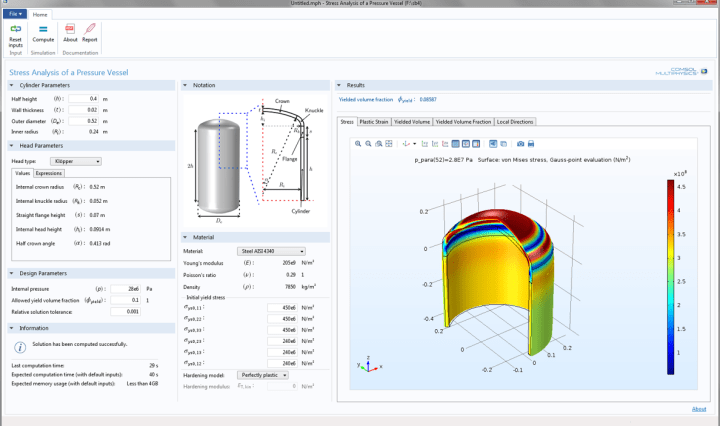
Design Pressure Vs MAWP (API, ASME)
On the drawing Pdesign: 16kg/cm2 and MAWP: 26 kg/cm2 User defines Pd: as above. t calculated: 4mm T selected: 12mm and second trial for formula founded P: 26 kg/cm2. Then designer says it is MAWP and equals to 26, which … Continue reading Design Pressure Vs MAWP (API, ASME)

Pressure Safety Valve Calibration, Maintenance
A Simple Pressure Safety Valve Calibration Procedure One of the simplest but most important instruments that I encounter which are used not for displaying or monitoring the process, but for safety, it is the pressure safety valves. When I was just starting out as a cal tech, looking at it installed in a tank makes me curious about its usage. You cannot see any actions or output display as a sign of its operation. In this post, I will present the following: What is a safety valve? Its difference with a relief valve Why do we need to calibrate a … Continue reading Pressure Safety Valve Calibration, Maintenance
 AMARINE