

PRV setting guides
Today I want to talk about steam safety valves: sizing, selection, installation, best practices. Steam safety valves installed wherever the maximum allowable working steam pressure of a system or over pressurizing a containing vessel is likely to be exceeded. In … Continue reading PRV setting guides
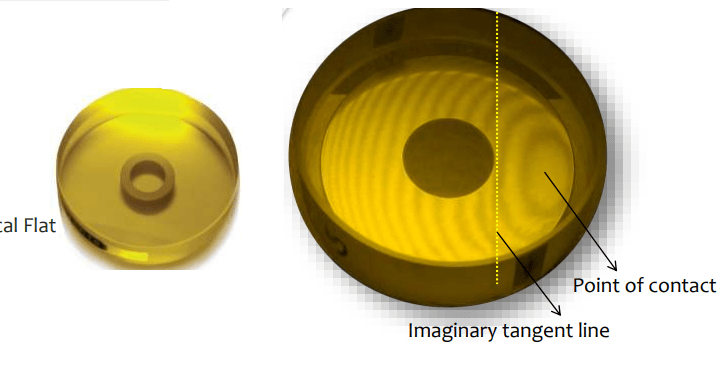
PR Valve Seat flatness with 3 light bands
To prevent leakage of the loading fluid, an optical precision on the order of three light beads/bands [0.0000348 in. (0.0008838 mm)] must be maintained in the flatness of seating surfaces on metal-seated pressure relief valves (see API 527). Imperfections in … Continue reading PR Valve Seat flatness with 3 light bands

What is Load test Safety Factor and Proof Test for Lifting devices?
What is the safe working load (SWL)? Safe Working Load (SWL) is the limiting safety factor to lift and carry any load safely. It must be clearly marked on any lifting device (hoist, lifts, lifting machines, and lifting tackles). Marking System of Safe Working Load Lifting equipment should have a tally plate indicating the Safe Working Load. The tally plate also indicates the identification number which can be mentioned in the test certificate held by the user. It should also indicate the date of the last inspection. Safe Working Load ( Or WLL) of different types of sling are given in … Continue reading What is Load test Safety Factor and Proof Test for Lifting devices?

Where is calibration mentioned in ISO 9001-2015
The ISO 9001 is a quality management system defined by a set of specific standards that helps businesses run as smoothly as possible. One of the clauses under this system, Monitoring and Measuring Resources, refers to the requirements of conformity that are set for all products and services. What is monitoring and measuring resources for ISO 9001? The process of monitoring and measuring resources for ISO 9001 includes making sure that all equipment is valid, up to date, and working properly. All measurements that are taken must be accurate and recorded for monitoring purposes. Monitoring and measuring resources, as outlined … Continue reading Where is calibration mentioned in ISO 9001-2015

ISO 17025 accredited vs compliant
Compliant or ISO 17025 accredited: Is there a difference? Recently I was having a conversation regarding quality and the often-used phrase came up- ” All things being equal”. This got me thinking when are all things equal? In this particular conversation, it was regarding compliant versus accredited. I don’t think it is immoral, illegal or unethical to use the term compliant when advertising a companies qualifications. That said, there is a significant difference between being compliant and being accredited. Often the term compliant is used when a company offering goods or services is not accredited to the particular standard referenced to … Continue reading ISO 17025 accredited vs compliant

Laboratory ISO 9001 vs ISO 17025
ISO 9001 or ISO 17025: How to choose a calibration company. ISO 17025 or ISO 9001: Which one is better? As a calibration company, we are sometimes asked which is better ISO 9001 or ISO 17025 certification. That really is the wrong question. Both of these International standards are excellent. The reason we said it is the wrong question is that they each have a particular focus. What is the difference between ISO 9001 and ISO 17025? ISO 9001 is a standard designed for the manufacturing and service sector and focuses the Quality Management System towards those major groupings. ISO … Continue reading Laboratory ISO 9001 vs ISO 17025

The project requires Killed Steel treatment on Pipe, Plate MTC.
Fully killed is the term to describe de-oxidized steel. After the steel is made, it is then poured into the continuous caster to make a long slab of steel. Think of a sausage maker – molten steel goes in at the top and rectangular slab comes out the bottom. This is called casting. During casting, small carbon monoxide bubbles can form between the steel grains if the oxygen is not removed. If you’ve ever painted a door and seen bubbles in the paint once you apply it you’ll recognize the similarities. To stop these bubbles appearing you paint slower, but … Continue reading The project requires Killed Steel treatment on Pipe, Plate MTC.
API 510 Addendum 2 (2018)
Date of Issue: March 2018 Affected Publication: API 510, Pressure Vessel Inspection Code: In-service Inspection, Rating, Repair, and Alteration, Tenth Edition, May 2014 Addendum 2 Page v (Table of Contents): Changed title in the entry for Section 6.7 to the following: Page 6: Added “deferral” term and definition: 3.1.16 deferral An approved and documented postponement of an inspection, test, or examination. See 6.7. Page 6: Added “due date” term and definition: 3.1.19 due date The date established by the owner-user and in accordance with this code, whereby an inspection, test, examination, or inspection recommendation falls due or is to be … Continue reading API 510 Addendum 2 (2018)
API 510 Addendum 1 (2017)
Date of Issue: May 2017 Affected Publication: API 510, Pressure Vessel Inspection Code: In-service Inspection, Rating, Repair, and Alteration, Tenth Edition, May 2014 Addendum 1 Page 26, Section 5.5.6.1, shall read: Inspection for CUI shall be considered for externally insulated vessels and those that are in intermittent service or operate at temperatures between: a) 10 °F (–12 °C) and 350 °F (177 °C) for carbon and low alloy steels, b) 140 °F (60 °C) and 350 °F (177 °C) for austenitic stainless steels, c) 280 °F (138 °C) and 350 °F (177 °C) for duplex stainless steels. Page 60, Section … Continue reading API 510 Addendum 1 (2017)
 AMARINE