




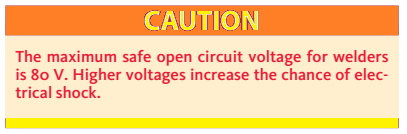
CSWIP 3.1: What is OCV ( Open Circuit Voltage ) in welding power source?
In this topic, we will talk about OCV in the welding power source. We need to solve some questions to clear this topic OR additional references on the below topics: Click here: What is OCV Open Circuit Voltage Maximum value … Continue reading CSWIP 3.1: What is OCV ( Open Circuit Voltage ) in welding power source?
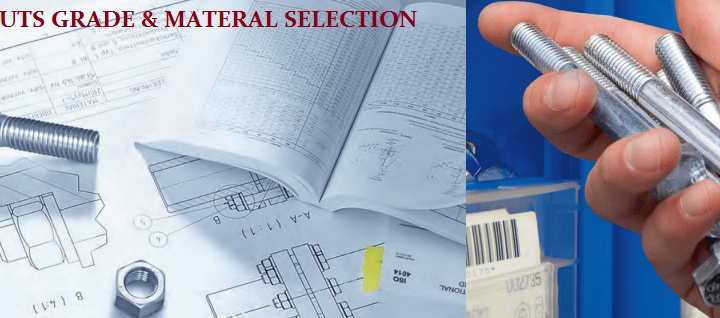
BOLT/NUT GRADE & MATERIAL SELECTION (Easy understand and select correctly the grade)
This short guide is intended to give a very basic introduction to ISO metric nuts and bolts. It is intended for those working in plant and machinery maintenance to give enough information to ensure that correct replacement parts are identified … Continue reading BOLT/NUT GRADE & MATERIAL SELECTION (Easy understand and select correctly the grade)

Thread of Bolts – Basic Knowledge
When checking Bolt material coming, do you have feeling lose in the forest of BOLT & THEARD? We will help you to identify them accordingly via this topic! It has internal thread & external thread, can call male & female also. 1) Thread direction: The helix of a thread can twist in two possible directions.: left hand & right hand. 2) Technical terms of thread: Type of thread: Pitch / TPI ( thread per inch ): – The pitch is the distance from the top of one thread to the next in mm. – TPI (Threads per inch) is used by … Continue reading Thread of Bolts – Basic Knowledge

CSWIP 3.1: Question with Answer and Explanation – Part 20
CSWIP 3.1 QUESTION AND ANSWER SERIES 1) A solid inclusion in a welder may be: Entrapped slag. (answer) Entrapped gas. Lack of inter-run fusion. None of the above. This is “solid” not gas! 2) Which is the following is a planar imperfection? Lack of sidewall fusion. (answer) Slag inclusion. Linear porosity. Root concavity. 3) For fillet welds it is normal practice in the UK and USA measure: Throat thickness. Leg lengths. ( answer ) Penetration depths. Both 1 and 3. Measure “Leg lengths” is easy checking on site. 4) Heavy porosity on the surface of some MMA welds made on … Continue reading CSWIP 3.1: Question with Answer and Explanation – Part 20

CSWIP 3.1: Question with Answer and Explanation – Part 19
CSWIP 3.1 QUESTION AND ANSWER SERIES CSWIP 3.1: Question with Answer and Explanation – Part 1 CSWIP 3.1: Question with Answer and Explanation – Part 2 CSWIP 3.1: Question with Answer and Explanation – Part 3 CSWIP 3.1: Question with Answer and Explanation – Part 4 CSWIP 3.1: Question with Answer and Explanation – Part 5 CSWIP 3.1: Question with Answer and Explanation – Part 6 CSWIP 3.1: Question with Answer and Explanation – Part 7 CSWIP 3.1: Question with Answer and Explanation – Part 8 CSWIP 3.1: Question with Answer and Explanation – Part 9 CSWIP 3.1: Question with … Continue reading CSWIP 3.1: Question with Answer and Explanation – Part 19

CSWIP 3.1: Question with Answer and Explanation – Part 18
CSWIP 3.1 QUESTION AND ANSWER SERIES CSWIP 3.1: Question with Answer and Explanation – Part 1 CSWIP 3.1: Question with Answer and Explanation – Part 2 CSWIP 3.1: Question with Answer and Explanation – Part 3 CSWIP 3.1: Question with Answer and Explanation – Part 4 CSWIP 3.1: Question with Answer and Explanation – Part 5 CSWIP 3.1: Question with Answer and Explanation – Part 6 CSWIP 3.1: Question with Answer and Explanation – Part 7 CSWIP 3.1: Question with Answer and Explanation – Part 8 CSWIP 3.1: Question with Answer and Explanation – Part 9 CSWIP 3.1: Question with … Continue reading CSWIP 3.1: Question with Answer and Explanation – Part 18

Protected: HULL SURVEY – PIPING OUTFIT (PART 4)
There is no excerpt because this is a protected post. Continue reading Protected: HULL SURVEY – PIPING OUTFIT (PART 4)

Protected: HULL SURVEY – PIPING OUTFIT (PART 3)
There is no excerpt because this is a protected post. Continue reading Protected: HULL SURVEY – PIPING OUTFIT (PART 3)

Protected: HULL SURVEY – PIPING OUTFIT (PART 2)
There is no excerpt because this is a protected post. Continue reading Protected: HULL SURVEY – PIPING OUTFIT (PART 2)
 AMARINE