




ASM Handbooks – Intro
This topic just general about AMS containing for each Volume: The ASM Handbook® series contains peer-reviewed, trusted information in every area of materials specialization. The series is the industry’s best known and most comprehensive source of information on ferrous and nonferrous metals and materials technology and is packed with over 35,000 pages of articles, illustrations, tables, graphs, specifications and practical examples for today’s engineer. Volume 1A: Cast Iron Science and Technology (scheduled release: July 31, 2017) Volume 1: Properties and Selection: Irons, Steels, and High-Performance Alloys Volume 2: Properties and Selection: Nonferrous Alloys and Special-Purpose Materials Volume 3: Alloy Phase … Continue reading ASM Handbooks – Intro

PIPING vs PIPING SYSTEM
1) Piping: Piping includes pipe, flanges, fittings, bolting, gaskets, valves, and the pressurecontaining portions of other piping components. It also includes pipe hangers andsupports and other items necessary to prevent overpressurization and overstressing of the pressure-containing components. It is evident that pipe is one element or a part of piping. Therefore, pipe sections when joined with fittings, valves, and other mechanical equipment and properly supported by hangers and supports, are called piping. 2) Piping system: Interconnected piping subject to the same sets of design conditions. 3) Piping components: Mechanical element suitable for joining or assembly into pressure tight fluid containing … Continue reading PIPING vs PIPING SYSTEM
PIPING/TUBING CONFIGURATIONS
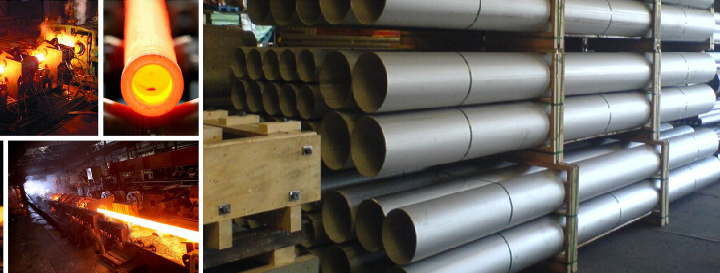
I. Pipe / tube fabrication: Seamless Pipe: •Strongest amongst all pipes. •Homogenous structure throughout pipe length. •Available in wide range of size. •Restriction on large size •Used in manufacturing of bends, elbow, tee. * Seamless pipe are manufacture by following methods: * … Continue reading PIPING/TUBING CONFIGURATIONS

CSWIP 3.1 CODES, WPS, WELD REPAIR
Key notes: Definitions: STANDARD: Document established by concensus/ agreement and approved by recognised body (class/third parties ) Ex: Yard standard/ Subcon standard approved by Owner & Class, or JIS/AISI HARMONISED STANDARD: Document established for interchangability of products, processes, services Ex: ISO/IACS/IEC CODE OF PRACTICE, or Set of Manufacture rule Procedure for design/manufacture/installation/utilization. CAN BE A STANDARD, PART OF STANDARD OR INDEPENDENT OF A STANDARD Ex: ASTM/ ASME/ ANSI/ DIN/ JIS REGULATION: Ligislative rules adopted by authority Ex: IMO/ILO/MARPOL/OCIFM SPECIFICATION: Meanningful data supporting stating needs & expectation with obligatory Ex: Contract specification/ project specification PROCEDURES: Established specified way/process activites following Spec/Code/Standard … Continue reading CSWIP 3.1 CODES, WPS, WELD REPAIR

CSWIP 3.1 HEAT TREATMENT
Key notes: PWHT-STRESS RELIEF (No phase transformed) For C-S: ~ 350*C For S-S: ~ 500*C PWHT-HYDROGEN RELEASE Temp ~ 250*C/inch/hour (max 3 hours) PWHT CONTROL: TEMP WORKS FOR STEEL: Continue reading CSWIP 3.1 HEAT TREATMENT

CSWIP 3.1 WELDABILITY
Key notes: General: Weldability depend on Carbon and alloy elements Poor weldability mean –> the occurrence of cracking Alloying elements: Carbon Most effect to the Hardness Hardness is invert proportion Ductility %C typical <~ 0.25-0.3% %CE or CVE ~ 0.4-0.5% Manganese De-sulfure –> reduce rick of Hot cracks (Solidification Crack) C-S (<0.8% Mn) vs C-Mn-S (<1.6% Mn) Molybdenum For Creep resistance (at High temp operation) HIC Higher susceptible in Alloy C-S (crack in weld) than C-S (crack in HAZ) Chevron (arrow) crack most occurred in SAW HIC never happen in Ni/Cu alloy (they can’t be harden by heat) … Continue reading CSWIP 3.1 WELDABILITY

CSWIP 3.1 DT & NDT
Key notes: General: Fillet weld fracture and Butt weld nick-break tests are not used for WPS (only for WPQR) CTOD impact test is used for Special concern in specification, not WPS Hardness test: (Brinell-BHN/Vicker-HV/Rockwell-Rc) Hardest region Impact test: Izod vs Charpy Visual assessment Tensile test: Proof stress Rp 0.2 – used for un-identified Y.S material (aluminium) Measuring the “overall strength of weld joint” –> TRANSVERSE T.S TEST All weld metal T.S test –> For Electrode Manufacture only! STRA Test: Macro/Micro Examination: This is Quantity Test Bend Test: This test CAN evaluate the Fusion and Ductility T < 12mm … Continue reading CSWIP 3.1 DT & NDT

CSWIP 3.1 RESIDUAL STRESSES AND DISTORTION
Key notes: How many types (typical) ? Transverse Short-transverse (Non-uniform contraction through thickness) Longitudinal Thermal expansion is the greatest affecting factor (Alu, SS) “Yield strength – Y.S direct proportion with Residual Stress BUT Y.S is inverse proportion with Distortion (Because of elastic state/thermal expansion)“. Neutral axis welding for distortion prevention Strong-backing method used for Thicker plate only. Back step/Skip welding method used for Thinner plate Continue reading CSWIP 3.1 RESIDUAL STRESSES AND DISTORTION

CSWIP 3.1 WELDING DEFECTS
Key notes: Undercut Excessive reinforcement protection The most serious defect – Surface breaking (Lack of Interun fusion on cap) Burn though Arc strike REPAIRING METHOD LOP/LOF Continue reading CSWIP 3.1 WELDING DEFECTS
 AMARINE