


SHIP CAPACITY PLAN & DEADWEIGHT SCALE
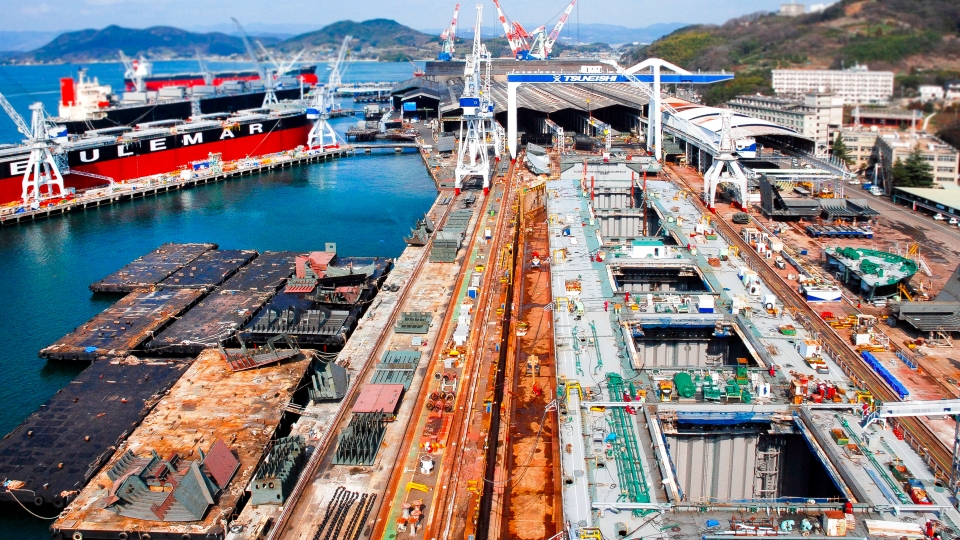
Capacity Plan A plan of the spaces available for cargo, fuel, freshwater, water ballast, etc, and containing cubic or weight capacity lists for such spaces and a scale showing deadweight capacities at varying draughts and displacements. Visit: Shipbuilding Knowledge A-Z for more understanding on shipbuilding DWT Scale This scale also shows the moment to change trim 1 cm and the TPC for each draught; a diagram with measurements of winter, summer, tropical and freshwater load-line with a diagram of the position of the deck line; this is usually placed alongside the deadweight and displacement scale so that the deadweight or displacement … Continue reading SHIP CAPACITY PLAN & DEADWEIGHT SCALE

DIA-INCH & INCH-METRE IN PIPING
In O&G EPCI projects, both Dia-Inch & Inch-Meter are generally considered as units for measurement of the piping job loads (mainly for Welding/ Installation/ Hydro Test measurements). The former being denoted by the DI of (phi) ” or ” and Inch-metre by IM respectively; can be understood as below: Consider a 10″ NB pipe of length says 30 metres. If there are 5 joints of this pipe to be welded, the quantum of this welding job is calculated as: DI = *Pipe Dia (in inches ~ 10) x No. of joints (~5) = 50 Dia-Inch *Notes: The joint included of Flanges, … Continue reading DIA-INCH & INCH-METRE IN PIPING

What are the advantages of SMA welding?
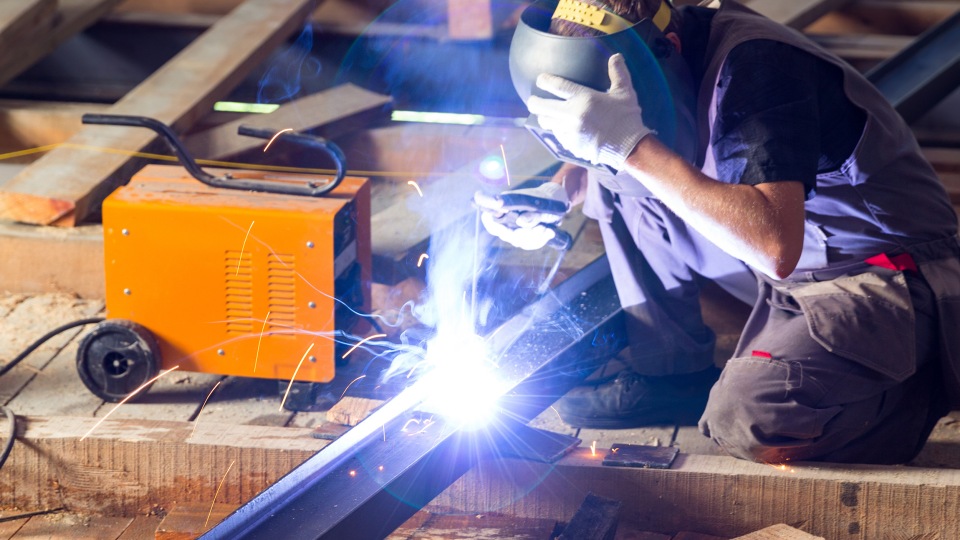
SMA: Shield Metal Arc Welding (SMAW) SMAW is the most widely used welding process for metal fabrication because of its low cost, flexibility, portability, and versatility. The welding machine itself can be as simple as a 110-volt, step-down transformer that can be plugged into a normal electrical outlet. The electrodes are available from a large number of manufacturers in packages ranging from 1 lb (0.5 kg) to 50 lb (22 kg). The SMAW process is very versatile because the same SMA welding machine can be used to make a wide variety of weld joint designs in a wide variety of metal … Continue reading What are the advantages of SMA welding?

Weld Carbon steel to Stainless steel
It is not uncommon to find fabricating shops that are welding a variety of metals including carbon steel, stainless steel, aluminum, and nickel alloys. In many cases, some of these materials need to be welded to other types. Once a very common situation, especially in shipbuilding, oil & gas projects in welding carbon steel to stainless. One of the most frequent questions we receive about this is what filler metal to use. Welding dissimilar metals can be tricky, especially when you get into the exotic alloys. Always consult with the manufacturer of the base material or seek the expert advice … Continue reading Weld Carbon steel to Stainless steel

Demagnetize prior to weld
Knowledge for Reference: Demagnetization: Magnetic field strength above a critical intensity is affecting the weld-ability. Well-known interference are: – Arc welding procedures are sensible to high magnetic field strengths. Welding in presence of magnetic fields may cause magnetic arc blow. Arc blowing is strongly reduced below field strengths of 16 A/cm (=20 Gauss). – In arc welding with filler wires (FCAW/GMAW/SMAW) , sticking of the wire to a side is caused when significant magnetic fields are present. The sticking is minimized below field strengths of 8 A/cm (=10 Gauss). – In electron beam welding (EBW), the quality of the welding is strongly affected by magnetism. At field strengths well below 2 A/cm (=2.5 Gauss) the disturbing influence on welding … Continue reading Demagnetize prior to weld

PQR – Bending test requirements (AWS D1.1, ASME IX or API)
The bend test is a simple and inexpensive qualitative test that can be used to evaluate both the ductility and soundness of a material. It is often used as a quality control test for butt-welded joints, having the advantage of simplicity of both test piece and equipment. The bend test may be free formed or guided. The guided bend test is where the coupon is wrapped around a former of a specified diameter and is the type of test specified in the welding procedure and welder qualification specifications. For example, it may be a requirement in ASME IX, ISO 9606 and ISO 15614 Part … Continue reading PQR – Bending test requirements (AWS D1.1, ASME IX or API)

Preheating for Transition joint ( Different thickness ) – Explanation of Heat transfer and its affection to HAZ at both sides.
Check the Password and visit: Protected: Preheating for Transition joint ( Different thickness ) – full words Continue reading Preheating for Transition joint ( Different thickness ) – Explanation of Heat transfer and its affection to HAZ at both sides.

What is Welding Preheating ?
The phenomenon of heating the joint in the weld zone before the commencement of welding procedure is known as pre-heating. Normally it is applied by the use of ovens, flame producing torch, resistive heating elements and high frequency heating elements. It helps to eliminate welding interruption and several imperfections and set the joining phenomenon on smooth track. Why to use Pre-heat ? Following are the main reasons for using the pre-heat in a welding procedure. The use of Pre-heat, eliminates the surface moisture; consequently reducing the hydrogen induced cracking. It tweaks fusion and deposition of weld metal in a better … Continue reading What is Welding Preheating ?

Can ASTM material use for ASME application.
Under ASME, ASTM materials are NOT automatically accepted. SA designated material should be used at all time ( NOT ASTM A designation), with following exception from Interpretation VIII-1-92-74: Hence, the inspector MUST verify that the Year edition of the ASTM specification detailed on material certification is accepted by the specified edition of ASME code section II, Part A. ASME II Part A details which ASTM editions for each material are equivalent to ASME SA grade as below extract: Example: ASTM A-36 (2005) is identical to ASME SA-36 (ed. 2007/2008 add) Meanwhile, the ASTM A737 material is confirmed to be compliant … Continue reading Can ASTM material use for ASME application.
 AMARINE